Developing critical thinking skills is essential for children’s cognitive growth and problem-solving skills. By engaging in activities that promote critical thinking, children can enhance their analytical thinking, creativity, and decision-making skills. In this blog, we’ll explore 50 exciting activities that you can introduce to your children to boost their critical thinking skills. These activities are designed to be fun, engaging, and educational, providing a solid foundation for their future success.
1. Puzzle solving
Encourage your child to tackle puzzles of varying complexity, such as jigsaw puzzles, logic puzzles, or crosswords, to stimulate their problem-solving skills. Puzzles require patience, attention to detail, and critical thinking to find solutions.
Examples:
- Jigsaw puzzles: Choose puzzles with different themes, sizes, and difficulty levels to challenge your child’s spatial awareness and critical thinking skills
- Logic puzzles: Provide your child with puzzles that involve logical reasoning, such as Sudoku or grid-based logic puzzles.
- Crosswords: Engage your child in crossword puzzles that require them to think analytically, make connections, and recall information.
2. Board games
Engage in board games that require strategy and decision-making , like chess, Scrabble, or Settlers of Catan, to develop critical thinking skills while having fun as a family. These games encourage logical thinking, planning, and adaptability.
Examples:
- Chess: Play chess with your child, teaching them the rules and strategies involved in planning moves, analyzing opponents’ moves, and thinking ahead.
- Scrabble: Challenge your child to form words using limited letters and strategize placement to maximize points.
- Settlers of Catan: Introduce your child to this strategy-based game where they must make resource management decisions, negotiate with other players, and adapt to changing circumstances.
3. Storytelling
Encourage your child to create imaginative stories, which require them to think creatively and logically. Storytelling enhances critical thinking skills by developing plot structures, character development, and problem-solving within narratives.
Examples:
- Bedtime stories: Ask your child to come up with their own bedtime story, encouraging them to use their imagination, think about characters and plot, and resolve conflicts.
- Collaborative storytelling: Engage in a game where each person adds a sentence to create a story, prompting your child to think on their feet and make logical connections between ideas.
- Story prompts: Provide your child with story prompts or picture cards and ask them to create a story around them, fostering creative and critical thinking skills.
Ask your child to come up with their own bedtime story, encouraging them to use their imagination, think about characters and plot, and resolve conflicts.
Poylaa Pro Tip
4. Science experiments
Conduct simple science experiments at home, allowing your child to hypothesize, observe, and draw conclusions. Science experiments develop critical thinking skills by encouraging inquiry, logical reasoning, and analysis of results.
Examples:
- Water displacement experiment: Help your child explore the concept of volume by conducting a simple experiment using different-shaped objects and measuring water displacement.
- Plant growth experiment: Allow your child to set up an experiment where they test the effects of various factors (light, water, temperature) on plant growth, analyzing the results and drawing conclusions.
- Density experiments: Engage your child in experiments involving liquids with different densities, such as layering liquids or floating objects, to promote critical thinking skills about density and buoyancy.
5. Building blocks
Provide building blocks or construction toys that require planning, spatial awareness, and logical thinking to construct complex structures. Building blocks enhance critical thinking skills by promoting problem-solving, spatial reasoning, and creativity.
Examples:
- LEGO: Engage your child in building projects with LEGO blocks, encouraging them to follow instructions or create their own designs, fostering critical thinking skills and creativity.
- Magnetic building tiles: Allow your child to experiment with magnetic building tiles to construct different structures, promoting logical thinking and spatial awareness.
- Wooden blocks: Provide your child with wooden blocks of various shapes and sizes, challenging them to build stable structures or replicate designs, developing critical thinking skills and fine motor skills.
6. Arts and crafts
Engage your child in arts and crafts projects that promote problem-solving and creativity, such as designing and building a cardboard city or creating a collage from recycled materials. Arts and crafts stimulate critical thinking skills by encouraging imaginative problem-solving, decision-making, and self-expression.
Examples:
- Cardboard city: Encourage your child to design and build a cityscape using cardboard boxes, tubes, and other recycled materials, requiring them to plan, problem-solve, and think creatively.
- Collage art: Provide your child with magazines, newspapers, and other materials to create a collage that tells a story or conveys a specific message, fostering critical thinking skills and artistic expression.
- Origami: Teach your child the art of origami, allowing them to follow instructions or create their own origami designs, promoting logical thinking, attention to detail, and fine motor skills.
“Every child is an artist; the problem is staying an artist when you grow up”
Pablo Picasso
7. Role-playing games
Encourage your child to engage in imaginative play and pretend scenarios, allowing them to think critically and make decisions within a fictional context. Role-playing games develop critical thinking skills by fostering imagination, decision-making, and perspective-taking.
Examples:
- Doctor or veterinarian role-play: Provide your child with a doctor or veterinarian kit, allowing them to diagnose and treat imaginary patients, promoting critical thinking skills and empathy.
- Restaurant role-play: Set up a pretend restaurant where your child takes on the roles of chef, server, and customer, encouraging them to think critically about menu planning, customer service, and problem-solving.
- Historical reenactment: Help your child recreate historical events or characters through role-playing, allowing them to research, analyze, and understand different perspectives.
8. Coding activities
Introduce your child to basic coding concepts through age-appropriate coding games or resources, fostering logical thinking and problem-solving skills. Coding activities develop critical thinking skills by promoting algorithmic thinking, debugging, and logical reasoning.
Examples:
- Coding games: Use coding games or apps designed for children to introduce them to coding concepts, such as sequencing, loops, and conditional statements.
- Scratch programming: Teach your child how to use Scratch, a visual programming language, to create interactive stories, animations, or games, promoting critical thinking skills and creativity.
- Robotics kits: Provide your child with robotics kits that involve coding and building, allowing them to program robots to perform specific tasks, fostering logical thinking and problem-solving.
9. Brain teasers
Share brain teasers or riddles with your child, challenging them to think critically and find creative solutions. Brain teasers enhance critical thinking skills by promoting problem-solving, logical reasoning, and thinking outside the box.
Examples:
- Riddles: Present your child with riddles that require them to analyze clues, think critically, and come up with creative solutions, such as “I speak without a mouth and hear without ears. I have no body, but I come alive with the wind. What am I? (Answer: an echo).”
- Math puzzles: Engage your child in math-related puzzles that involve logical thinking, pattern recognition, and numerical problem-solving, like Sudoku or math riddles.
- Lateral thinking puzzles: Pose puzzles that require your child to think laterally and consider alternative perspectives to find solutions, such as “A man walks into a restaurant, orders albatross, takes one bite, and then leaves. Why?”
Teach your child to think out of the box!
Introduce a variety of brain teasers, including logic puzzles, math puzzles, lateral thinking puzzles, and visual puzzles. This will provide a well-rounded cognitive workout and keep the activity interesting and challenging.
Poylaa Pro Tip
10. Nature exploration
Take your child on nature walks, encouraging them to observe and analyze their surroundings, fostering curiosity and critical thinking skills. Nature exploration develops critical thinking abilities by promoting observation skills, scientific inquiry, and environmental awareness.
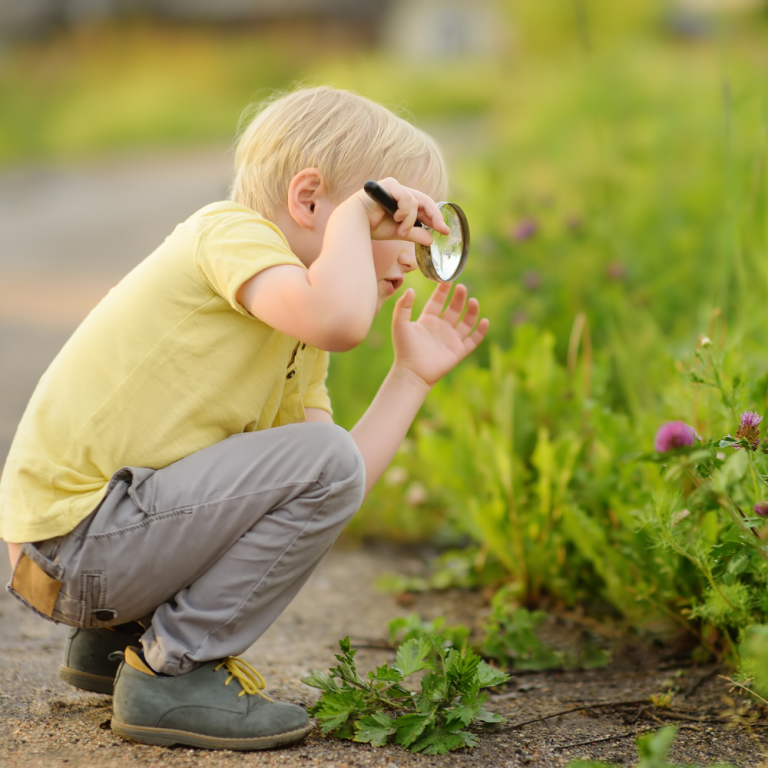
Examples:
- Nature scavenger hunt: Create a list of items or natural phenomena for your child to find and observe during a nature walk, stimulating curiosity and critical thinking abilities about the environment.
- Plant or animal identification: Teach your child to identify different plants or animals they encounter during outdoor adventures, promoting observation, research, and critical thinking.
- Nature journaling: Encourage your child to keep a nature journal where they can record their observations, ask questions, and make connections, fostering critical thinking skills and scientific inquiry.
11. Strategy video games
Introduce your child to strategy-based video games that require decision-making, problem-solving, and resource management. Strategy games develop critical thinking skills by promoting strategic planning, analyzing different scenarios, and making informed choices.
Examples:
- Civilization series: Engage your child in the Civilization games, where they must build and manage civilizations, make diplomatic decisions, and strategize for success.
- Age of Empires: Introduce your child to historical strategy games like Age of Empires, where they must build and manage civilizations, engage in warfare, and make strategic decisions.
- Plants vs. Zombies: Let your child play Plants vs. Zombies, a tower defense game that requires them to strategically place plants to defend against zombies.
12. Debate and discussion
Engage your child in debates or discussions on age-appropriate topics, encouraging them to think critically, analyze different viewpoints, and articulate their thoughts. Debates and discussions enhance critical thinking abilities by promoting research, analysis, and effective communication skills.
Examples:
- Current events discussions: Discuss current news topics with your child, encouraging them to analyze different perspectives, gather evidence, and form well-reasoned arguments.
- Ethical debates: Pose ethical dilemmas to your child and engage in debates about the different approaches and consequences, fostering critical thinking abilities and ethical reasoning.
- Book club discussions: Read a book together with your child and have discussions about the themes, character motivations, and plot developments, encouraging critical analysis and interpretation.
Encourage your child to actively participate in debates and discussions by sharing their thoughts, asking questions, and engaging with others' arguments. This will help develop their confidence and critical thinking skills.
Poylaa Pro Tip
13. Maths puzzles
Present your child with mathematical puzzles or challenges, promoting logical thinking and problem-solving skills. Maths puzzles enhance critical thinking skills by fostering analytical skills, pattern recognition, and mathematical reasoning.
Examples:
- Sudoku: Provide your child with Sudoku puzzles at varying difficulty levels, encouraging them to apply logical thinking, deduction, and pattern recognition to solve the puzzles.
- Number sequence puzzles: Challenge your child with number sequence puzzles where they must identify the pattern and determine the missing number(s).
- Math riddles: Share math riddles with your child that require them to use mathematical concepts and logical reasoning to find the solution, such as “I am an odd number. Take away one letter, and I become even. What number am I? (Answer: Seven).”
14. Cooking or baking
Involve your child in the kitchen, where they can follow recipes, measure ingredients, and make decisions based on cooking techniques. Cooking or baking activities develop critical thinking skills by promoting measurement skills, following instructions, and problem-solving in the kitchen.
Examples:
- Recipe exploration: Let your child choose a recipe they would like to try and guide them through the cooking or baking process, encouraging them to follow instructions, make adjustments, and troubleshoot if needed.
- Ingredient substitutions: Encourage your child to experiment with ingredient substitutions while cooking or baking, fostering critical thinking skills about flavors, textures, and potential outcomes.
- Menu planning: Involve your child in planning a meal or a special occasion menu, considering factors such as dietary restrictions, nutritional balance, and flavor combinations.
15. Mystery solving
Organize scavenger hunts or mystery-solving activities, where your child must gather clues, analyze information, and draw logical conclusions. Mystery solving activities develop critical thinking skills by promoting deductive reasoning, problem-solving, and attention to detail.
Examples:
- Treasure hunt: Set up a treasure hunt with hidden clues and riddles that your child must solve to find the ultimate treasure, encouraging critical thinking skills, logical reasoning, and following a trail of evidence.
- Escape room puzzles: Create DIY escape room challenges at home or participate in virtual escape rooms that require your child to solve puzzles, unlock codes, and unravel mysteries.
- Detective role-play: Engage your child in detective role-play scenarios where they must investigate a fictional crime scene, analyze evidence, and deduce the culprit.
16. Mind mapping
Teach your child how to create mind maps to visually organize their thoughts, promoting critical thinking and planning skills. Mind mapping enhances critical thinking skills by facilitating brainstorming, making connections between ideas, and organizing information.
Examples:
- Brainstorming sessions: Encourage your child to use mind maps to brainstorm ideas for projects, essays, or creative endeavors, helping them analyze connections and explore different angles.
- Note-taking and summarizing: Teach your child to create mind maps as a method of summarizing and organizing information from books, lectures, or research materials, promoting critical thinking abilities and effective study techniques.
- Planning events or projects: Involve your child in planning events or projects by creating mind maps that outline tasks, timelines, and resources needed, fostering critical thinking skills and project management skills.
17. Journaling
Encourage your child to maintain a journal, where they can reflect on their experiences, express their thoughts, and develop their analytical skills. Journaling promotes critical thinking skills by encouraging self-reflection, introspection, and articulation of ideas.
Examples:
- Daily reflection: Have your child write a journal entry at the end of each day, reflecting on their experiences, emotions, and lessons learned, fostering critical thinking abilities and self-awareness.
- Opinion journal: Encourage your child to express their opinions on various topics in their journal, supporting them in analyzing their thoughts, supporting arguments, and considering counter-arguments.
- Travel journal: If your child goes on a trip or a vacation, have them maintain a travel journal, where they can describe their experiences, reflect on cultural observations, and analyze the impact of the journey.
“Journal writing, when it becomes a ritual for transformation, is not only life-changing but life-expanding.”
Jen Williamson
18. Historical investigations
Explore historical events or figures with your child, encouraging them to ask questions, analyze different perspectives, and draw conclusions based on evidence. Historical investigations develop critical thinking abilities by promoting research skills, analysis of primary and secondary sources, and forming evidence-based arguments.
Examples:
- Research a historical figure: Encourage your child to choose a historical figure they are interested in and guide them through researching their life, achievements, and impact, fostering critical thinking skills and historical analysis.
- Analyze primary sources: Introduce your child to primary sources such as letters, diaries, or photographs from a specific historical period, prompting critical thinking skills about historical context, biases, and different perspectives.
- Compare historical events: Engage your child in comparing and contrasting different historical events, analyzing causes, effects, and connections between them, promoting critical thinking abilities and historical synthesis.
19. Memory games
Play memory-enhancing games like “Simon Says” or card-matching games to improve your child’s critical thinking skills, including attention to detail. Memory games develop critical thinking skills by promoting observation, concentration, and memory recall.
Examples:
- “Simon Says”: Play the classic game “Simon Says” with your child, challenging their ability to remember and replicate sequences of actions or instructions.
- Card-matching games: Use a deck of cards or memory game sets where your child needs to find matching pairs by remembering the position of cards they have already seen.
- “I Packed My Suitcase”: Play the memory game “I Packed My Suitcase” where each person adds an item to the suitcase, remembering and reciting the growing list in the correct order.
20. Music and rhythm
Introduce your child to musical instruments or rhythm-based activities, helping them develop pattern recognition, coordination, and critical thinking skills. Music and rhythm activities enhance critical thinking skills by fostering auditory perception, problem-solving in rhythm patterns, and musical interpretation.

Examples:
- Musical instrument exploration: Allow your child to experiment with different musical instruments and encourage them to learn basic melodies, promoting critical thinking and coordination skills.
- Rhythm pattern challenges: Teach your child different rhythm patterns and challenge them to recreate or compose their own rhythmic sequences, fostering critical thinking abilities and creativity.
- Music appreciation analysis: Listen to various genres of music with your child and discuss elements such as melody, rhythm, and instrumentation, encouraging critical thinking abilities about the artistic choices made in the composition.
21. Socratic questioning
Engage your child in Socratic questioning, encouraging them to explore their own thoughts, consider alternative perspectives, and evaluate evidence. Socratic questioning promotes critical thinking skills by fostering deeper reflection, analysis of ideas, and the ability to form well-reasoned arguments.
Examples:
- What evidence supports your conclusion?
- What are the strengths and weaknesses of this argument?
- How might someone with a different perspective interpret this situation?
- What assumptions are being made in this statement?
- Can you think of an alternative solution to this problem?
22. Decision-making scenarios
Present your child with hypothetical scenarios that require them to make decisions based on available information, considering various consequences. Decision-making scenarios enhance critical thinking skills by promoting analysis, evaluating options, and considering long-term effects.
Examples:
- Your friend wants to go to a theme park, but you have a family event the same day. What factors would you consider in making your decision?
- You have saved money and want to buy a new toy. However, there’s also a charity event where you can donate the money to help others. How would you decide what to do?
- Your school is offering two extracurricular activities at the same time, and you can only choose one. What criteria would you use to make your decision?
23. Problem-solving stories
Read books or stories that present problem-solving narratives, allowing your child to analyze situations, consider solutions, and predict outcomes. Problem-solving stories develop critical thinking abilities by fostering analytical skills, creative thinking, and understanding cause and effect.
Examples:
- “The Three Little Pigs”: Discuss different strategies the pigs used to build their houses and analyze the outcomes of their choices.
- “The Adventures of Sherlock Holmes”: Explore how Sherlock Holmes solves mysteries by analyzing clues, considering multiple perspectives, and using logical reasoning.
- “The Magic School Bus” series: Follow the characters’ scientific problem-solving adventures, discussing the scientific concepts, problem-solving methods, and outcomes.
24. Building and engineering challenges
Provide building kits or engineering challenges that require your child to design, construct, and troubleshoot structures, fostering critical thinking and spatial skills. Building and engineering challenges promote problem-solving, logical thinking, and hands-on application of knowledge.
Examples:
- LEGO bridge building: Task your child with building a bridge using LEGO bricks that can support a certain weight, requiring critical thinking skills about structural integrity and design.
- DIY catapult: Challenge your child to construct a working catapult using household materials, encouraging critical thinking abilities in terms of design, tension, and projectile trajectory.
- Marble run construction: Provide materials for your child to design and build a marble run with various twists, turns, and challenges, fostering critical thinking skills in problem-solving and spatial reasoning.
25. Logic puzzles
Introduce your child to logic puzzle books or online resources, where they can unravel patterns and solve complex problems. Logic puzzles enhance critical thinking skills by promoting deductive reasoning, pattern recognition, and analytical skills.
Examples:
- Sudoku: Present your child with Sudoku puzzles of varying difficulty levels, encouraging logical thinking, deduction, and pattern recognition to solve them.
- Einstein’s Riddle: Challenge your child with Einstein’s Riddle, a complex logic puzzle that involves organizing clues, making deductions, and finding the solution.
- Grid-based logic puzzles: Provide your child with grid-based puzzles like Nonograms or Picross, where they must use logical reasoning to fill in cells and reveal hidden pictures.
26. Financial literacy games:
Utilize games or simulations that teach financial literacy skills, such as budgeting or investment decision-making, to develop critical thinking skills regarding money management. Financial literacy games foster decision-making, analyzing risks and rewards, and understanding the consequences of financial choices.
Examples:
- Monopoly: Play the classic board game Monopoly, where your child must make decisions about buying properties, managing money, and analyzing investment opportunities.
- Virtual stock market games: Engage your child in virtual stock market simulations where they can make investment decisions and track the performance of their portfolio, promoting critical thinking abilities about risk and reward.
- Budgeting games: Use online budgeting games that simulate real-life financial situations, challenging your child to make decisions about spending, saving, and financial planning.
27. Virtual reality experiences
Engage your child in virtual reality simulations that require critical thinking skills, problem-solving skills, and decision-making skills within immersive environments. Virtual reality experiences foster critical thinking skills by providing interactive scenarios where your child must analyze, evaluate options, and make informed choices.
Examples:
- Historical virtual tours: Explore historical locations or events through virtual reality simulations, prompting critical thinking abilities about historical context, causality, and decision-making in historical contexts.
- Virtual science experiments: Allow your child to conduct virtual science experiments in a simulated laboratory, challenging them to analyze data, draw conclusions, and troubleshoot experimental setups.
- Problem-solving simulations: Use virtual reality simulations that present problem-solving scenarios, where your child must analyze the situation, make decisions, and evaluate outcomes.
28. Comparative analysis
Encourage your child to compare and contrast different objects, concepts, or ideas, helping them develop analytical skills and logical reasoning. Comparative analysis promotes critical thinking abilities by challenging your child to examine similarities, differences, and relationships between different elements.
Examples:
- Compare and contrast animals: Prompt your child to compare and contrast two animals of their choice, discussing their physical characteristics, habitats, behaviors, and adaptations.
- Comparative book analysis: Have your child read two books on a similar topic or theme and analyze the different approaches, writing styles, and perspectives of the authors.
- Comparative analysis of historical figures: Encourage your child to compare and contrast two historical figures, examining their contributions, ideologies, and impacts on society.
29. Science fiction exploration
Read science fiction books or watch movies with your child, prompting discussions about future possibilities and encouraging them to think critically about the consequences of scientific advancements. Science fiction exploration fosters critical thinking abilities by challenging your child to consider ethical, social, and technological implications.
Examples:
- “The Giver” by Lois Lowry: Discuss the dystopian society depicted in the book and encourage critical thinking skills about the consequences of a seemingly perfect world.
- “Ender’s Game” by Orson Scott Card: Analyze the moral and ethical questions raised in the story regarding warfare, identity, and empathy.
- “Black Mirror” TV series: Watch selected episodes of the series and engage in critical discussions about the impact of technology on society, privacy, and ethics.

30. Data analysis
Introduce your child to basic data analysis through age-appropriate activities, like organizing and interpreting simple charts or graphs. Data analysis activities develop critical thinking abilities by promoting data interpretation, pattern recognition, and drawing conclusions based on evidence.
Examples:
- Sports statistics: Have your child analyze sports statistics and create simple charts or graphs to compare players’ performances or team records.
- Weather data: Collect weather data over a period of time and help your child organize and analyze the data to identify patterns, connections, and trends.
- Survey analysis: Conduct a simple survey on a topic of interest to your child, and together, analyze the responses to draw conclusions and present findings in a visual format.
31. Cultural exploration
Explore different cultures and traditions with your child, encouraging them to analyze and appreciate diverse perspectives and practices. Cultural exploration promotes critical thinking skills by fostering empathy, understanding of different worldviews, and the ability to see beyond one’s own cultural lens.
Examples:
- Food tasting: Prepare or try foods from different cultures, discussing their significance, ingredients, and cultural context.
- Festivals and celebrations: Learn about festivals and celebrations from different cultures, exploring their customs, rituals, and historical backgrounds.
- Cultural artifacts: Study artifacts, clothing, or artworks from different cultures, discussing their significance, symbolism, and artistic styles.
- Comparative mythology: Compare mythological stories from different cultures, analyzing common themes, symbols, and lessons conveyed.
32. Time management activities
Engage your child in activities that require planning and time management skills, such as organizing their schedule or completing tasks within set time limits. Time management activities develop critical thinking skills by promoting organization, prioritization, and efficient use of time.
Examples:
- Daily schedule planning: Have your child create a schedule for their day, allocating time for different activities and tasks, considering priorities and time constraints.
- Task completion challenges: Set specific tasks or assignments for your child and challenge them to complete them within set time limits, promoting critical thinking abilities in managing time and meeting deadlines.
- Project planning: Guide your child through planning and executing a longer-term project, teaching them how to break it down into smaller tasks, estimate time requirements, and allocate resources effectively.
33. Map reading and navigation
Teach your child how to read maps, use a compass, or navigate using GPS, promoting spatial awareness and critical thinking abilities. Map reading and navigation activities develop critical thinking skills by enhancing spatial reasoning, problem-solving, and understanding geographic relationships.
Examples:
- Treasure hunt: Create a treasure hunt where your child must follow a map, use landmarks, and navigate their way to find hidden treasures.
- Orienteering: Engage in orienteering activities where your child must use a compass and map to navigate a course and find specific locations.
- Virtual map exploration: Use online map platforms or apps that allow your child to explore different places virtually, encouraging critical thinking abilities about directions, distances, and landmarks.
34. Entrepreneurial projects
Encourage your child to develop entrepreneurial projects, where they can identify needs, create business plans, and problem-solve to deliver solutions. Entrepreneurial projects foster critical thinking by promoting innovation, market analysis, resource management, and strategic thinking.
Examples:
- Lemonade stand: Support your child in setting up a lemonade stand, guiding them through the process of planning, budgeting, marketing, and problem-solving.
- Social entrepreneurship: Encourage your child to identify a social or environmental issue they care about and develop a project or initiative to address it, fostering critical thinking about social impact and sustainable solutions.
- Business simulation games: Use online or board games that simulate business scenarios, challenging your child to make strategic decisions, analyze market trends, and manage resources effectively.
35. Science documentaries
Watch educational science documentaries with your child, sparking curiosity, critical thinking , and discussions about scientific concepts. Science documentaries promote critical thinking skills by presenting real-world examples, explaining complex ideas, and encouraging analysis and questioning.
Examples:
- Planet Earth series: Explore the wonders of the natural world through documentaries like the “Planet Earth” series, prompting discussions about ecosystems, biodiversity, and environmental conservation.
- Cosmos: Journey through the universe with documentaries like “Cosmos,” exploring topics such as astrophysics, astronomy, and the history of scientific discoveries.
- Scientific investigation documentaries: Watch documentaries that showcase scientific investigations and experiments, fostering critical thinking abilities about the scientific method, data analysis, and hypothesis testing.
36. Virtual escape rooms
Explore virtual escape room experiences that require critical thinking skills, collaboration, and puzzle-solving skills to find solutions and escape. Virtual escape rooms enhance critical thinking skills by challenging problem-solving abilities, logical reasoning, and teamwork.
Examples:
- Online escape room games: Participate in online escape room experiences specifically designed for children, where they must solve puzzles, find clues, and unravel mysteries to escape.
- DIY escape rooms: Create your own escape room experience at home using puzzles, riddles, and challenges that your child must solve within a set time limit.
- Virtual reality escape rooms: Engage in virtual reality escape room simulations, where your child must navigate immersive environments, solve puzzles, and work together to escape.
37. Creative problem-solving
Encourage your child to brainstorm creative solutions to everyday problems, fostering critical thinking skills and innovative thinking skills. Creative problem-solving activities promote thinking outside the box, generating multiple solutions, and evaluating their feasibility.
Examples:
- Invention challenges: Present your child with invention challenges, such as designing a device to solve a specific problem or improving an existing product.
- Imaginative scenarios: Pose hypothetical scenarios to your child and ask them to come up with creative solutions, fostering critical thinking skills, imagination, and problem-solving skills.
- Reverse thinking: Encourage your child to solve problems by reversing assumptions or constraints, promoting critical thinking skills, and challenging conventional perspectives.
38. Current affairs discussions
Engage your child in discussions about current affairs and global issues, encouraging them to analyze complex problems and consider multiple perspectives. Current affairs discussions foster critical thinking skills by promoting analysis, evidence-based reasoning, and understanding of global challenges.
Examples:
- News analysis: Read news articles together and discuss the underlying issues, causes, and potential solutions, fostering critical thinking abilities and understanding of current events.
- Global challenges: Explore global issues such as climate change, poverty, or social justice, prompting discussions about their complexities, consequences, and possible actions.
- Debate current topics: Encourage your child to take part in debates about current topics, encouraging critical thinking skills, research skills, and effective communication.
39. Art appreciation
Visit art galleries or museums with your child, prompting them to analyze and interpret different artistic styles and techniques. Art appreciation activities develop critical thinking skills by fostering observation skills, interpretation, and understanding of artistic expression.
Examples:
- Museum visits: Explore different types of art, from paintings and sculptures to installations and multimedia exhibits, encouraging critical thinking skills about the messages, symbolism, and artistic choices.
- Art analysis: Choose an artwork and engage in a discussion with your child about its composition, color choices, use of space, and emotional impact.
- Artist research: Select an artist and research their body of work, discussing their style, influences, and artistic progression, promoting critical thinking skills and analysis of artistic development.

40. Building logical arguments
Teach your child the basics of constructing logical arguments, including identifying premises, analyzing evidence, and making coherent conclusions. Building logical arguments enhances critical thinking skills by promoting clear thinking, effective communication, and persuasive reasoning.
Examples:
- Debating topics: Engage your child in structured debates, where they must present arguments, support their claims with evidence, and counter opposing viewpoints.
- Persuasive writing: Encourage your child to write persuasive essays or speeches, guiding them to develop clear arguments, present evidence, and draw logical conclusions.
- Analyzing persuasive techniques: Together, analyze persuasive advertisements, speeches, or articles, discussing the use of logical reasoning, emotional appeals, and evidence-based arguments.
41. Team projects
Encourage your child to participate in team projects or group activities, where they can collaborate, communicate, and problem-solve with their peers. Team projects promote critical thinking skills by fostering teamwork, effective communication, and the ability to work towards a common goal.
Examples:
- Group science experiments: Have your child work on science experiments with a group, where they must divide tasks, share ideas, and analyze results collaboratively.
- Group art projects: Engage your child in group art projects that require brainstorming, sharing creative ideas, and working together to create a cohesive artwork.
- Community service initiatives: Encourage your child to participate in community service projects with other students, fostering critical thinking abilities about community needs, project planning, and effective teamwork.
42. Emotional intelligence exercises
Engage your child in activities that promote emotional intelligence, such as recognizing emotions, understanding others’ perspectives, and resolving conflicts. Emotional intelligence exercises enhance critical thinking skills by fostering empathy, self-awareness, and effective interpersonal skills.
Examples:
- Emotion charades: Play a game of charades where your child must portray different emotions, encouraging critical thinking abilities about non-verbal cues and empathy for others’ emotions.
- Perspective-taking exercises: Prompt your child to imagine themselves in someone else’s shoes and reflect on how they might feel or think in that situation, promoting critical thinking abilities about different perspectives.
- Conflict resolution scenarios: Present your child with hypothetical conflicts and guide them through problem-solving, encouraging critical thinking skills, communication skills, and empathy.
43. Science journaling
Encourage your child to maintain a science journal, where they can record observations, ask questions, and make predictions about natural phenomena. Science journaling promotes critical thinking skills by fostering scientific inquiry, data analysis, and the ability to draw evidence-based conclusions.
Examples:
- Nature observations: Encourage your child to observe and record findings about plants, animals, or natural phenomena in their environment, fostering critical thinking and scientific observation skills.
- Experimental documentation: Have your child document their science experiments, recording variables, procedures, and observations, fostering critical thinking abilities about the scientific method and data analysis.
- Research reflections: Guide your child to reflect on scientific articles or research studies they have read, encouraging critical thinking abilities about methodology, findings, and implications.
44. Environmental challenges
Engage your child in environmental projects or challenges that promote critical thinking abilities about sustainability, conservation, and ecological issues. Environmental challenges foster critical thinking skills by encouraging problem-solving, research skills, and awareness of environmental complexities.
Examples:
- Waste reduction campaign: Support your child in organizing a campaign to promote waste reduction or recycling in their community, fostering critical thinking abilities about environmental impacts and behaviour change strategies.
- Garden design and maintenance: Involve your child in designing and maintaining a garden, prompting critical thinking abilities about plant selection, soil health, and sustainable gardening practices.
- Environmental research projects: Encourage your child to conduct research on environmental topics, such as pollution, climate change, or endangered species, fostering critical thinking abilities about complex environmental issues and potential solutions.
45. Art puzzles
Provide art-based puzzles, like reassembling fragmented paintings or deciphering visual illusions, to enhance visual and critical thinking skills. Art puzzles promote critical thinking skills by encouraging visual analysis, pattern recognition, and problem-solving.
Examples:
- Jigsaw puzzles: Present your child with jigsaw puzzles featuring famous artworks, challenging them to analyze the shapes, colors, and patterns to complete the puzzle.
- Optical illusions: Share visual illusions with your child and discuss how they trick the eye, prompting critical thinking abilities about perception, depth, and visual cues.
- Puzzle games based on famous paintings: Use puzzle games or apps that feature famous paintings, requiring your child to analyze the details and arrange the puzzle pieces to recreate the artwork.
46. Mindfulness activities
Introduce mindfulness exercises that encourage your child to observe, reflect, and make thoughtful decisions based on present-moment awareness. Mindfulness activities foster critical thinking skills by promoting self-awareness, focused attention, and thoughtful decision-making.
Examples:
- Breathing exercises: Teach your child deep breathing techniques to enhance focus, calmness, and clarity of thought, fostering critical thinking skills by creating a centered mental state.
- Mindful eating: Guide your child to eat mindfully, paying attention to the taste, texture, and smell of food, fostering critical thinking abilities about sensory experiences and mindful decision-making.
- Body scan meditation: Lead your child through a body scan meditation, where they focus on different sensations in their body, fostering critical thinking abilities about the mind-body connection and self-awareness.
47. Theater and improvisation
Encourage your child to participate in theater or improvisation activities, promoting creativity, spontaneity, and critical thinking. Theater and improvisation foster critical thinking skills by encouraging quick thinking, adaptability, and creative problem-solving.
Examples:
- Improv games: Engage your child in improv games that require quick thinking, collaboration, and creative problem-solving, fostering critical thinking skills in the moment.
- Script analysis: Have your child analyze scripts, examining characters, motivations, and underlying themes, fostering critical thinking abilities about dramatic interpretation and storytelling.
- Performance reflections: After a theater performance, guide your child through a reflection process, encouraging critical thinking abilities about their performance, audience reactions, and ways to improve.
48. Ethical dilemmas
Discuss ethical dilemmas with your child, encouraging them to consider different perspectives, analyze consequences, and make ethical decisions. Ethical dilemmas foster critical thinking skills by promoting ethical reasoning, moral judgment, and understanding of ethical principles.
Examples:
- Moral storytelling: Share stories or scenarios that present ethical dilemmas and discuss possible actions, consequences, and ethical considerations.
- Debating ethical issues: Engage your child in debates or discussions about ethical topics, encouraging critical thinking, research skills, and analysis of ethical arguments.
- Ethical decision-making games: Use online or board games that present ethical dilemmas and require your child to make decisions based on ethical principles, promoting critical thinking and ethical reasoning abilities.
49. Foreign language learning:
Support your child in learning a foreign language, as it enhances critical thinking skills, improves memory, and promotes cultural understanding. Foreign language learning fosters critical thinking skills by challenging cognitive processes, developing analytical skills, and broadening cultural perspectives.
Examples:
- Language immersion activities: Engage your child in language immersion activities, such as watching movies or reading books in the target language, fostering critical thinking skills in language comprehension and cultural context.
- Language games and puzzles: Use language learning games or puzzles that require problem-solving, vocabulary recall, and understanding of grammar rules.
- Cultural exploration through language: Encourage your child to explore the culture associated with the language they are learning, fostering critical thinking abilities about cultural differences, traditions, and perspectives.
50. Reflection and self-evaluation
Encourage your child to reflect on their own thinking processes, evaluate their decisions, and identify areas for improvement, fostering metacognition and critical self-analysis. Reflection and self-evaluation promote critical thinking skills by encouraging introspection, self-awareness, and continuous improvement.
Examples:
- Learning reflection journals: Have your child maintain a learning reflection journal, where they can write about their learning experiences, challenges, and strategies for improvement, fostering critical thinking abilities about their learning process.
- Decision analysis: Encourage your child to reflect on their decision-making processes, analyzing the outcomes, and identifying lessons learned, fostering critical thinking and decision-making skills.
- Goal setting and progress tracking: Guide your child in setting goals and tracking their progress, promoting critical thinking skills in assessing their achievements, identifying areas for growth, and adjusting strategies.
- Remember to adapt these activities to your child’s age and interests, and encourage them to think critically, reflect, and embrace new challenges. These activities will help nurture their critical thinking skills in interactive and meaningful ways.
Remember to adapt these activities to your child’s age and interests, and encourage them to think critically, ask questions, and explore different perspectives. These activities will help nurture their critical thinking skills in engaging and interactive ways.