Self-harm encompasses behaviours that young people do to hurt themselves, such as self-cutting, self-burning, hitting or punching, pulling hair, and other harmful behaviors. These actions are often done in private and can leave visible marks or scars. and ingesting toxic substances or objects .
Examples of Self - Harm Practices
Some Examples of Self – Harm is a risky behavior exhibited by some teenagers includes :
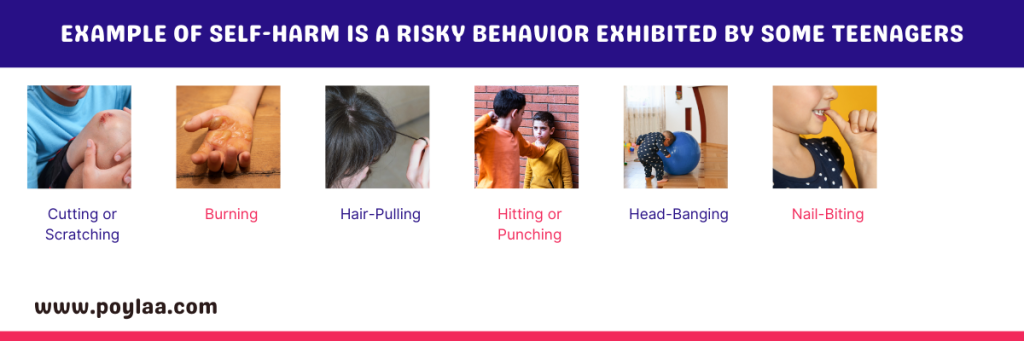
Cutting or Scratching: Some teenagers may intentionally use sharp objects like razor blades or scissors to cut or scratch their skin, resulting in visible wounds or scars. This act is a way for them to cope with emotional pain or stress temporarily.
Burning: Another form of self-harm is burning, where teenagers may use lighters, matches, or other heated objects to inflict burns on their skin as a means of releasing emotional distress or seeking relief.
Hair-Pulling: Trichotillomania is a condition where some teenagers feel compelled to pull out their hair from their scalp, eyebrows, or eyelashes as a way to cope with anxiety or tension.
Hitting or Punching: Some teenagers may hit or punch themselves as a way to release pent-up emotions or as a form of self-punishment.
Head-Banging: A self-harming behavior, where teenagers repeatedly bang their head against a hard surface as a response to emotional pain or frustration.
Nail-Biting: Although not as severe as other forms, chronic nail-biting can be a form of self-harm and may be linked to anxiety or stress.
Parents play a crucial role in preventing and addressing self-harming behaviors and risky behaviors in kids.
Parents play a crucial role in preventing and addressing self-harming behaviors and risky behaviors in kids. Here are some strategies parents can employ to support their children:
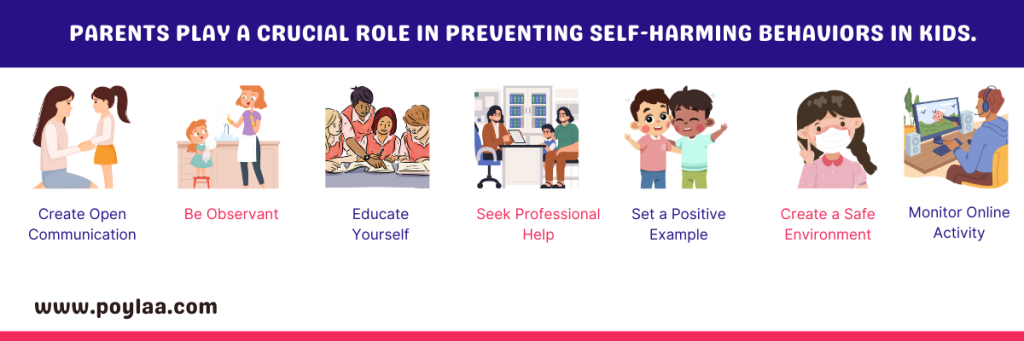
Create Open Communication: Foster an environment where kids feel comfortable talking about their emotions and struggles. Encourage them to express their feelings without fear of judgment.
Be Observant: Pay attention to changes in your child’s behavior, mood, or appearance. Look for signs of self-harm or risky behaviors, such as unexplained injuries or withdrawal from social activities.
Educate Yourself: Learn about self-harm and risky behaviors to better understand your child’s struggles and provide appropriate support.
Seek Professional Help: If you suspect your child is engaging in self-harm or risky behaviors, consult a mental health professional who specializes in working with children and adolescents.
Set a Positive Example: Model healthy ways to manage emotions and stress in front of your child. Show them how to communicate openly and seek help when needed.
Create a Safe Environment: Establish a home environment where kids feel safe and supported. Encourage open communication and emotional expression.
Monitor Online Activity: Be aware of your child’s online activities and the content they are exposed to. Set appropriate boundaries and discuss online safety.