Dangerous challenges are risky behaviors that some teenagers may engage in, often influenced by social media, peer pressure, or a desire for excitement and validation. These challenges involve performing tasks or activities that pose significant risks to physical and mental well-being. The participants may overlook the potential dangers, driven by the need for recognition or acceptance within their social circles.
Examples of Dangerous Challenges Practices
Examples of dangerous challenges include:
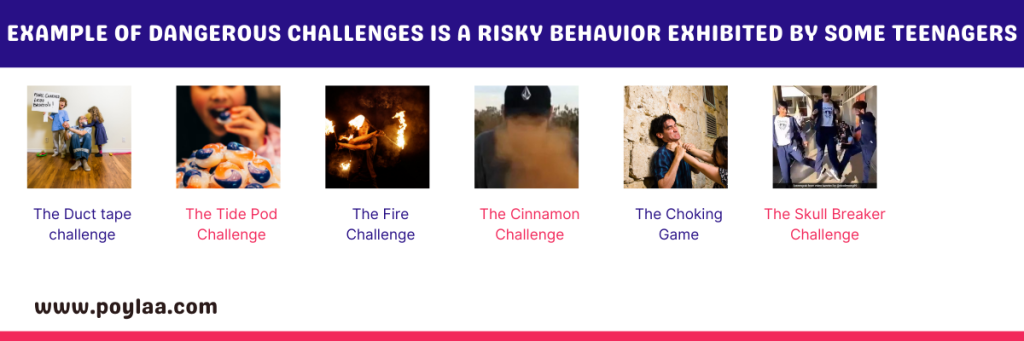
The Duct tape challenge: The Duct Tape Challenge is a dangerous activity that gained popularity on social media platforms, especially among teenagers. articipants wrap themselves in duct tape and attempt to free themselves, putting them at risk of suffocation and injuries.
The Tide Pod Challenge: Participants consume laundry detergent pods, which can lead to poisoning and severe health complications.
The Fire Challenge: Participants ignite themselves or objects on fire, risking severe burns and injuries.
The Cinnamon Challenge: Participants attempt to swallow a spoonful of ground cinnamon, risking choking and respiratory issues.
The Choking Game: Participants intentionally cut off oxygen to the brain, seeking a brief euphoric feeling, but exposing themselves to the risk of suffocation and brain damage.
The Skull Breaker Challenge: Participants trick others into jumping, and then they kick their legs out from under them, causing them to fall backward and potentially sustain serious injuries.
Parents play a crucial role in stopping dangerous challenges among teenagers
Parents play a crucial role in stopping dangerous challenges among teenagers by taking proactive measures to educate, communicate, and monitor their children’s online activities. Here are some steps parents can take:
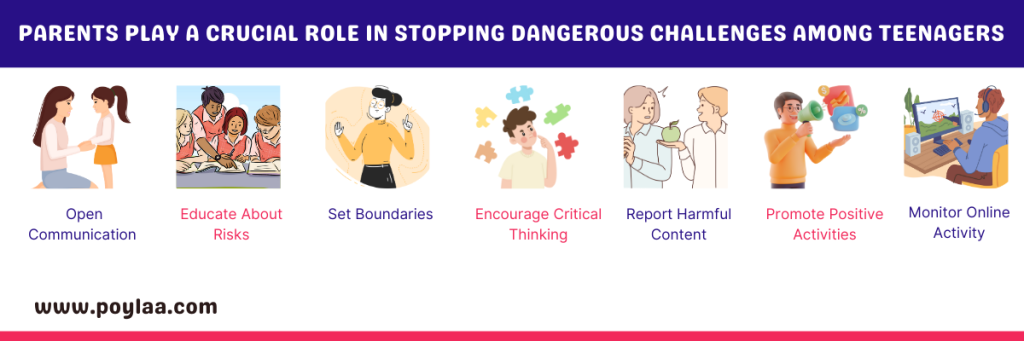
Open Communication: Foster an environment where kids feel comfortable talking about their emotions and struggles. Encourage them to express their feelings without fear of judgment.
Educate About Risks: Take the time to educate teenagers about the potential dangers and consequences of participating in dangerous challenges. Use real-life examples and news stories to illustrate the harm that can result from such activities.
Set Boundaries: Establish clear rules and boundaries regarding internet usage and social media. Monitor their online presence and ensure they are not following or engaging with accounts that promote harmful challenges.
Encourage Critical Thinking: Teach teenagers to think critically about the content they come across online. Help them develop the skills to question the safety and ethics of participating in challenges and trends.
Report Harmful Content: Encourage teenagers to report harmful or dangerous content they come across on social media platforms. Teach them how to use reporting tools to alert the platform and protect others.
Promote Positive Activities: Encourage teenagers to engage in positive and constructive activities that promote their well-being, creativity, and personal growth. Support their interests and hobbies that contribute to their development.
Monitor Online Activity: Be aware of your child’s online activities and the content they are exposed to. Set appropriate boundaries and discuss online safety.