Cyberbullying and online risks refer to harmful and negative behaviors that occur in the digital realm, specifically through electronic devices and internet platforms. Cyberbullying involves using technology, such as social media, instant messaging, or emails, to harass, intimidate, or harm others. It can take various forms, including sending hurtful messages, spreading rumors, posting offensive content, or impersonating someone online.
Online risks encompass a broader range of potential dangers that individuals, especially children and teenagers, may encounter while using the internet. These risks can include exposure to inappropriate content, interactions with strangers, sharing personal information unknowingly, falling victim to scams or fraud, encountering cyber predators, and experiencing various forms of online exploitation.
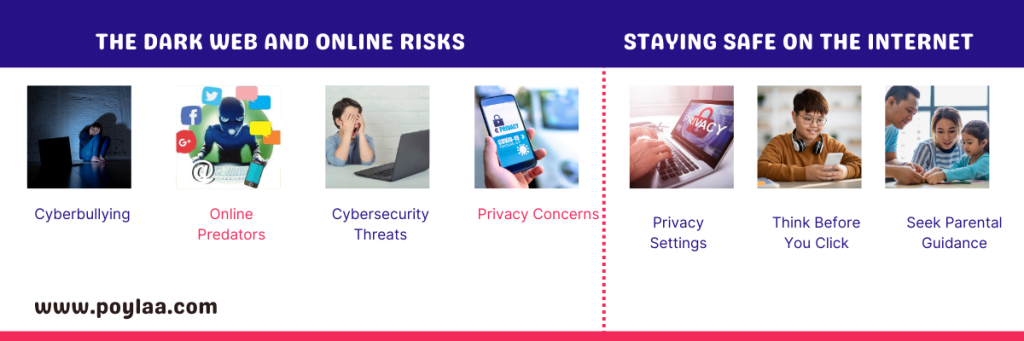
The Dark Web and Online Risks
Exploring the hidden dangers of the dark web and its potential role in cyberbullying and online risks.
Cyberbullying: Cyberbullying is a growing concern among teenagers. Through social media platforms and online forums, cyberbullies can target their victims with hurtful messages, threats, and even share private information. The anonymity of the internet emboldens cyberbullies to act without facing immediate consequences.
Online Predators: Teenagers may unknowingly interact with online predators who disguise themselves as peers. These predators may attempt to exploit vulnerable teenagers for personal gain, leading to potential dangers.
Cybersecurity Threats: Malicious software, phishing emails, and hacking attempts pose cybersecurity risks to teenagers. Falling victim to such threats can lead to data breaches and compromised online accounts.
Privacy Concerns: Sharing personal information online can be risky. Teenagers should be cautious about what they share and with whom to avoid falling victim to identity theft or other online scams.
Staying Safe on the Internet
Privacy Settings: Review and adjust privacy settings on social media accounts to control who can view your posts and personal information.
Think Before You Click: Be cautious about clicking on suspicious links or downloading files from unknown sources. They may contain malware or viruses.
Seek Parental Guidance: If uncertain about online activities or encountering something distressing, talk to your parents or guardians for support and guidance.
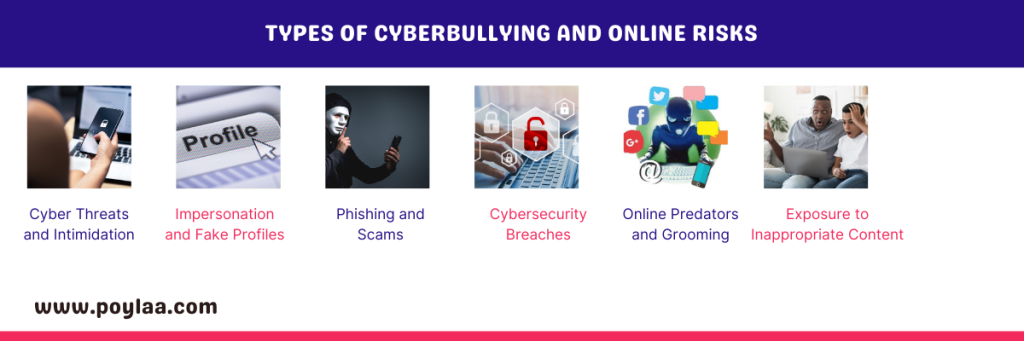
Types of Cyberbullying and Online Risks
Types of Cyberbullying and Online Risks includes:
Cyber Threats and Intimidation: Cyberbullies may issue threats or engage in intimidation tactics through digital means. This can include sending threatening messages, spreading false rumors of physical harm, or using fear to control their victims.
Impersonation and Fake Profiles: Some cyberbullies create fake profiles or impersonate their victims online to deceive and cause harm. They may use these fake identities to spread misinformation or engage in harmful behaviors under the victim’s name.
Phishing and Scams: Teenagers may fall victim to phishing attempts or online scams, where cybercriminals use deceptive tactics to obtain personal information, such as passwords or financial details.
Cybersecurity Breaches: Teenagers who do not prioritize their online security may fall victim to hacking, data breaches, and unauthorized access to their personal information.
Online Predators and Grooming: Teenagers may unknowingly interact with online predators who groom and exploit them for their own purposes, posing significant risks to their safety and privacy.
Exposure to Inappropriate Content: Online risks also involve exposure to inappropriate content, including violence, pornography, or extremist ideologies, which can negatively impact teenagers’ mental health and well-being.
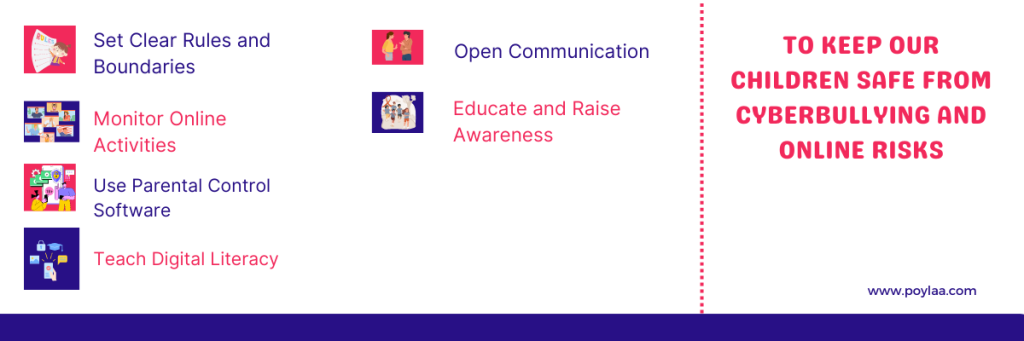
To keep our children safe from cyberbullying and online risks
To keep our children safe from cyberbullying and online risks, we can take the following measures:
Set Clear Rules and Boundaries: Establish clear rules for internet usage, social media, and online activities. Set age-appropriate time limits and discuss appropriate online behavior with your child.
Monitor Online Activities: Keep an eye on your child’s online activities, especially if they are younger. Regularly review their social media accounts and online interactions to ensure their safety.
Use Parental Control Software: Consider using parental control software to block inappropriate content and set restrictions on online access. These tools can help provide an additional layer of protection.
Teach Digital Literacy: Help your child develop digital literacy skills to critically evaluate online content and identify potential risks. Teach them about privacy settings and the importance of protecting personal information.
Open Communication: Encourage open and honest communication with your child. Create a safe space where they feel comfortable sharing their online experiences and concerns. Be a supportive and non-judgmental listener.
Educate and Raise Awareness: Talk to your child about cyberbullying and online risks. Educate them about the potential dangers and consequences of sharing personal information, interacting with strangers, or engaging in harmful online behaviors.
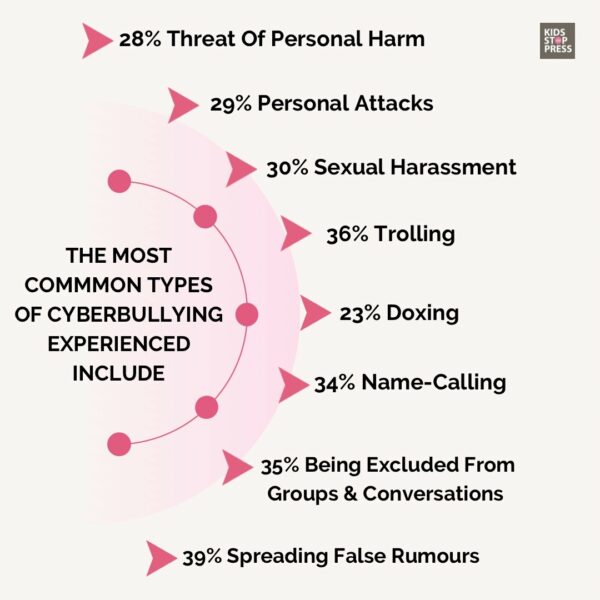
Statistics and Data
Trolling (36 %)
Personal attacks (29 % per)
Sexual harassment (30 %)
Threat of personal harm (28 %)
Doxing (23 %)
Spreading false rumours 39 %)
Being excluded from groups and conversations (35 %)